Do Plastic Water Bottles Have BPA?
Exploring the Link Between Plastic Water Bottles and BPA
If you’ve ever wondered whether or not plastic water bottles have BPA, you’re definitely not alone. This is one of the most common questions I hear from people who are trying to live a healthier, more eco-friendly lifestyle.
There are so many mixed messages out there. Some bottles are labeled “BPA-free” and others don’t say anything at all. It can get confusing to know what’s really safe for you and your family.
I’ve dug into this topic myself because, like you, I want to make sure the water I’m drinking isn’t leaching harmful chemicals from the bottle it’s stored in. In this post, we’ll break down what BPA actually is, whether or not it’s still lurking in plastic water bottles, and safer alternatives you can use every day.
What Is BPA and Why Should You Care?
BPA, short for bisphenol A, is a chemical that has been used in plastics and resins since the 1960s. It’s often found in polycarbonate plastics, which are hard, clear, and commonly used to make food containers, water bottles, and even the lining of metal cans.
In the beginning, BPA seemed like a great chemical that helped create durable and lightweight products. However, over time, researchers started to notice potential health concerns tied to this chemical.
The big issue with BPA is that it’s a hormone disruptor. That means it can mimic estrogen in your body and interfere with your endocrine system.
Studies suggest that long-term exposure may be linked to issues such as fertility problems, developmental concerns in children, and even an increased risk of certain chronic conditions like heart disease. While the research is ongoing, there’s enough evidence that many people (myself included) prefer to avoid it altogether.
Another reason to care is how BPA exposure happens. It doesn’t just sit quietly in the plastic. Instead, it can leach out of the material, especially when the container is exposed to heat or wear.
That means your water bottle sitting in a hot car, or your reusable container going through the dishwasher, may be releasing BPA into your food and drink.
So, when we ask the question, “Do plastic water bottles have BPA?” what we’re really asking is, “Am I being exposed to a chemical that could impact my health?” The good news is, we can dig into this and find safer ways to stay hydrated.
Do Plastic Water Bottles Have BPA? The Truth Behind the Label

The short answer to whether or not water bottles contain BPA is: it depends on the bottle. Many disposable plastic water bottles, like the kind you grab from a case at the grocery store, are made from PET (polyethylene terephthalate).
PET doesn’t typically contain BPA, which is reassuring. However, the situation becomes trickier with reusable plastic bottles or older bottles made from hard, clear polycarbonate plastic. These are the ones most likely to contain BPA.
When BPA-free labeling became more common, many companies switched to alternative plastics. However, there’s a catch. BPA-free doesn’t necessarily mean chemical-free.
Related: The Most Toxic Items Hiding in Your Kitchen Right Now
Some of the replacement chemicals, like BPS or BPF, are showing similar hormone-disrupting effects in early studies. That means while you might avoid BPA, you’re not automatically in the clear.
So, how can you tell if your water bottle has BPA? Check the recycling code on the bottom.
Plastics marked with #7 (other) or sometimes #3 (PVC) are most likely to contain BPA or other chemicals of concern. Meanwhile, #1 (PET), #2 (HDPE), #4 (LDPE), and #5 (PP) are considered safer options.
This is why I prefer to skip plastic water bottles altogether when I can. Still, knowing which plastics are safer helps you make better decisions if you’re in a pinch.
The Health Concerns Linked to BPA
BPA’s reputation as a hormone disruptor isn’t just a buzzword. It’s backed by science.
When BPA enters the body, it can mimic estrogen and interfere with how hormones normally function. This is especially concerning for pregnant women, infants, and children, since their bodies are still developing and more sensitive to endocrine disruption.
Studies have suggested links between BPA exposure and fertility problems, developmental delays, early puberty, and even behavioral issues in children. In adults, long-term exposure has been tied to heart disease, high blood pressure, type 2 diabetes, and certain cancers.
While researchers are still uncovering the full scope of BPA’s health effects, many experts agree that it’s best to limit exposure whenever possible.
Another layer to this issue is cumulative exposure. BPA doesn’t just come from water bottles. It can also be found in canned foods, receipts, and even household dust. So, even if your water bottle contributes only a small amount, when you add up all the sources, it can become a much bigger deal.
Personally, when I started to think of it this way, I realized avoiding BPA in my water bottle was one of the simplest swaps I could make for peace of mind.
After all, we drink water every single day. Making sure that water is as clean and toxin-free as possible is a simple yet powerful step toward protecting your health.
Which Types of Plastic Are Most Likely to Contain BPA?
Not all plastics are created equal, and understanding which ones are most likely to contain BPA can help you make smarter choices. The easiest way to start is by checking the recycling codes on the bottom of your bottle or container.
Here’s a quick breakdown:
- #7 (Other): This category is a catch-all, but it often includes polycarbonate plastic, which is the type most likely to contain BPA. If your water bottle is old, hard, and clear, chances are it falls into this category.
- #3 (PVC): While not typically used for water bottles, PVC can contain harmful additives and should also be avoided.
- #1 (PET or PETE): Common in disposable water bottles. PET doesn’t contain BPA, but it’s not meant for repeated use because it can break down and leach other chemicals over time.
- #2 (HDPE), #4 (LDPE), #5 (PP): These are generally considered safer options if you must use plastic.
The problem is that many of us can’t always tell what type of plastic we’re holding. I remember going through my cupboard one day and realizing some of my older reusable bottles didn’t even have a code on them. That made me question just how safe they really were.
If you’re unsure, a good rule of thumb is to avoid older plastic bottles, especially those that are scratched, cloudy, or have been exposed to heat. Those signs suggest the material is breaking down, which increases the chances of chemical leaching.
Are BPA-Free Bottles Really Safe?

When BPA became a public concern, many companies quickly began marketing their products as BPA-free. While that sounds reassuring, the reality isn’t so black and white.
Often, BPA was simply swapped out for similar chemicals like BPS (bisphenol S) or BPF (bisphenol F). Unfortunately, research is showing that these substitutes can also mimic hormones in the body and potentially have similar health impacts.
This phenomenon is called “regrettable substitution.” Essentially, one harmful chemical is replaced with another that hasn’t been as thoroughly studied but later turns out to have the same problems. That’s why even a BPA-free label doesn’t necessarily mean a product is non-toxic.
Related: How to Reduce Your Exposure to Microplastics
For me, this was a turning point. I realized that while BPA-free was better than nothing, it wasn’t a guarantee of safety.
That’s when I started transitioning away from plastic altogether. I found that switching to glass and stainless steel bottles gave me peace of mind and also cut down on the plastic waste I was generating.
If plastic is your only option, choose BPA-free from reputable brands, but be mindful that there may still be risks. If possible, consider investing in non-plastic alternatives that won’t leave you guessing.
How to Tell if Your Water Bottle Contains BPA
If you’re not sure whether your water bottle contains BPA, don’t worry. There are a few simple ways to check.
- Look for the recycling code: As mentioned earlier, plastics labeled with #7 (other) are the most likely culprits. If your bottle doesn’t have a code, that’s also a red flag.
- Check the label: Many newer bottles will proudly state BPA-free. While that doesn’t guarantee it’s free of all chemicals, it at least means BPA wasn’t used.
- Consider the age of the bottle: If you’ve had it for more than 10 years, or if it’s scratched, cloudy, or worn, it’s best to replace it. Older polycarbonate bottles were almost always made with BPA.
- Do the brand research: Some manufacturers are more transparent than others about what materials they use. A quick online search can often give you the answer.
When I went through my own stash of water bottles, I realized I had a mix. Some with clear labeling and others that were total mysteries. For the questionable ones, I decided it was better to recycle them and invest in bottles I could feel confident about.
At the end of the day, it’s not worth second-guessing something you use every single day. A little effort up front can save you from unnecessary exposure down the road.
Eco-Friendly and Non-Toxic Alternatives to Plastic Water Bottles
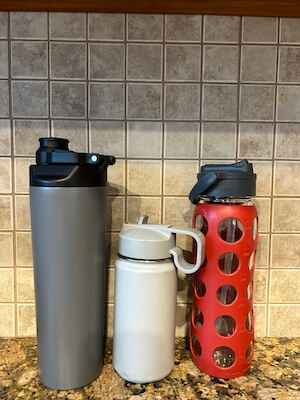
If you’re ready to ditch plastic, there are some fantastic alternatives that are both healthier for you and better for the planet. My personal favorites are stainless steel and glass water bottles.
Stainless steel bottles are durable, lightweight, and great at keeping drinks hot or cold. They don’t leach chemicals, and with so many options available, you can find one that suits your lifestyle. I’ve had the same insulated stainless steel bottle for years, and it still looks brand new.
Stainless steel is also a great option for kids. If your children are anything like my son, they need something that can stand up to accidental drops, bumps, and falls!
Glass bottles are another safe option. They don’t absorb flavors or odors, and they’re 100% recyclable. The downside is that they’re heavier and more fragile. However, many brands now offer protective silicone sleeves that make them easier to carry around.
By switching to eco-friendly alternatives, you’re not just protecting your health; you’re also cutting down on the billions of single-use plastic bottles that end up in landfills and oceans every year.
It’s a small change that makes a big difference. Honestly though, once you make the switch, you’ll probably never look back.
Tips for Reducing Plastic Exposure in Daily Life
Even if you’ve swapped your water bottle, plastics sneak into our lives in so many other ways. The good news is, there are plenty of simple habits you can adopt to reduce your overall exposure.
- Avoid heating food in plastic. BPA and other chemicals leach more readily when plastic is heated. Use glass or ceramic containers instead.
- Cut back on canned foods. Many cans are lined with BPA-based resins. Choose fresh, frozen, or foods in glass jars when possible.
- Say no to receipts. Thermal paper often contains BPA. Opt for digital receipts whenever you can.
- Store food in glass or stainless steel. This reduces exposure and helps cut down on plastic waste.
- Filter your water. Some home water filters can help remove BPA that may leach from pipes or containers.
When I first started making these swaps, I was surprised at how much plastic I was using without even realizing it. Over time, though, it had become second nature.
I now keep a reusable bottle, coffee cup, and shopping bags with me whenever I leave the house, which saves me money and reduces my exposure all at once.
You don’t need to be perfect to make a difference. Just a few mindful changes can drastically cut down your contact with unnecessary chemicals.
Final Thoughts: Staying Hydrated Without the Worry
Water is essential for life. The last thing any of us want is to worry about harmful chemicals every time we take a sip.
While asking whether or not plastic water bottles have BPA opens the door to some unsettling information, it also empowers you to make better choices.
The truth is, many disposable bottles don’t contain BPA. However, reusable plastic bottles, especially older ones, often do.
Plus, even BPA-free options aren’t completely risk-free. That’s why I recommend leaning toward safer alternatives like stainless steel or glass whenever you can.
For me, making the switch wasn’t just about avoiding BPA. It was also about cutting back on plastic waste and aligning my daily habits with a more sustainable lifestyle.
So, the next time you reach for a water bottle, take a moment to think about how it’s made. With a little awareness and a few small swaps, you can stay hydrated, protect your health, and reduce your impact on the planet all at the same time.